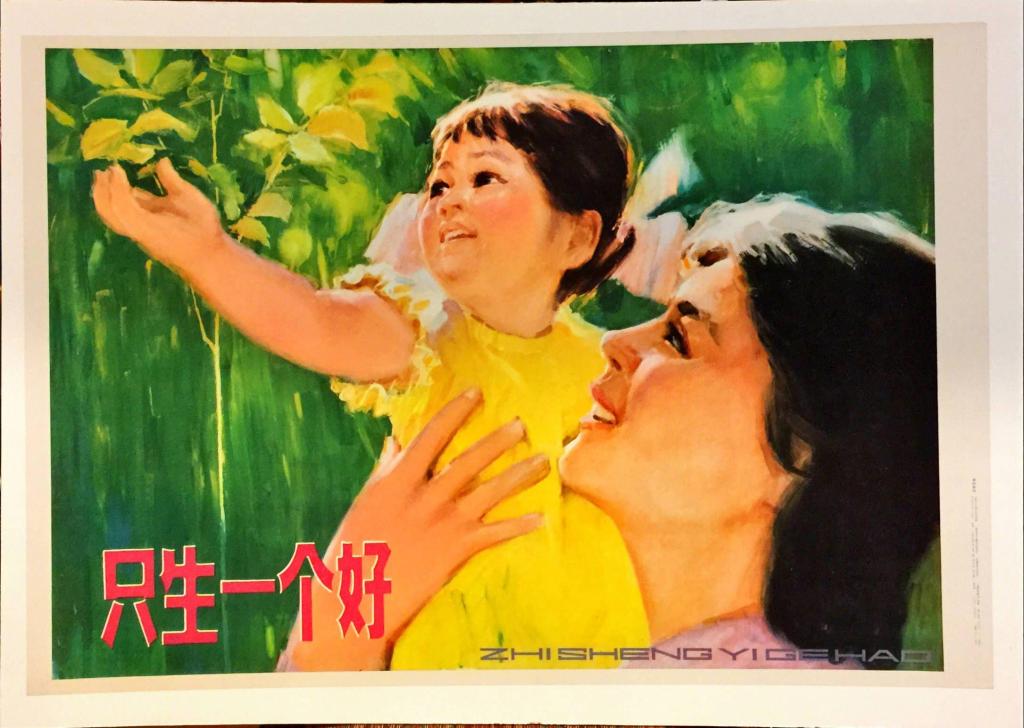
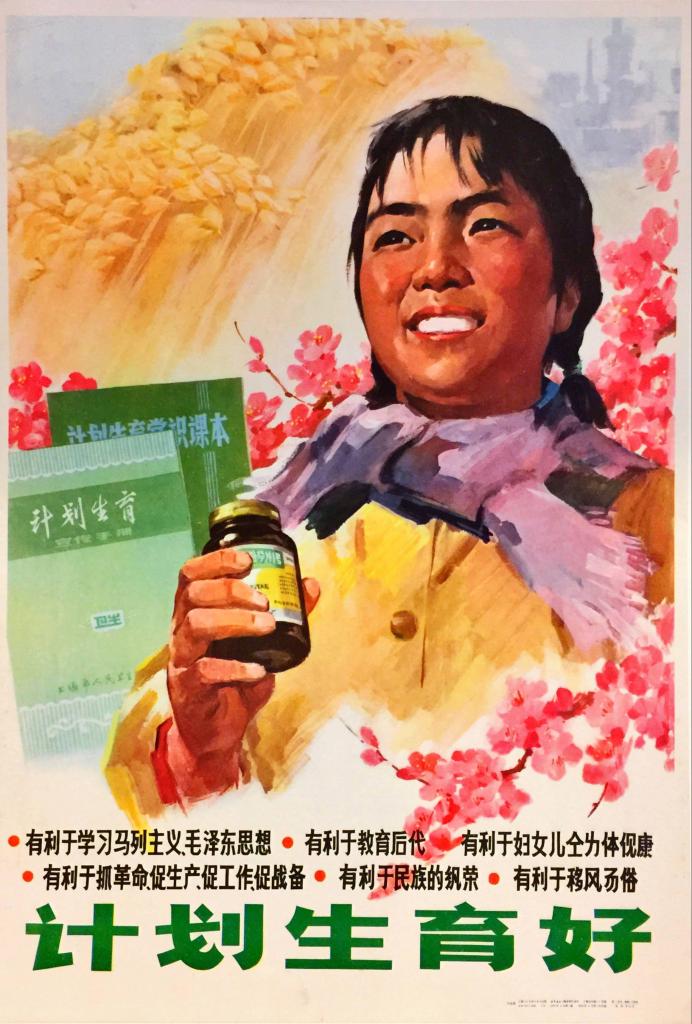
This is a collection of feminist writings on the matter of Family Planning in the People’s Republic of China from the 1970s to now. Fragments of academic essays, testimonies, and snippets of life writings pieced together to weave multidirectional memories of Chinese women in this collective yet fractured form. (Rothberg) A melange of readings of Moyan’s prose fiction Frog (蛙) – a work which the author himself describes as all about “procreation” and which I will challenge – and translations of women’s writings will offer intimate yet critical lens to look at the poetics of memory-writing. (Moyan 2021) This website, therefore, demands new ways to look at a troubled yet overlooked history in pushing back the rigid and reductionist definitions of genre and form. This space breaks down the limitations of history as stale, immobile, and cohesive. Feminist writing realizes its potential through disruption, convolution, mixing, and recontextualizing in response to the patriarchal necessity of being tamed. Here lingers a feminist sensibility that refuses to be summarized in grand and official narratives of the nation-state.
Xiaoyang Hua, 2025
Poetics of Remorse in Moyan’s Frog
At first pitch, Moyan’s Frog (2009) is a collection of letters that chronicles memories of an overburdened past. The narrator – Wanzu – addresses himself under the pseudonym Tadpole, writing five letters to his Japanese “sensei” Sugitani Akihito. These letters denote detailed history of the villagers in Gaomi, China from the early 1950s before the outbreak of the Cultural Revolution, all the way to decades after the implementation of China’s One Child Policy. In particular, Tadpole zooms in on the stories of Gugu (his aunt) – a village doctor who performs expertise in helping local pregnant women with delivering their children. As a student of the renowned Canadian doctor Norman Bethune and a believer in modern medical methods, Gugu gained fame from her excellence in service. Because of her advanced medical techniques, Gugu gradually replaced the local non-professional helpers “old midwives,” or “old witches” as the villagers refer to jokingly. (Moyan 12) History moves forward as Tadpole writes on. He then covers Gugu’s transformation from the benevolent village Nightingale to the notorious goon of the family-planning team. Tadpole also includes episodes of other locals throughout the years when China experienced great social-economic changes, especially in rural areas. These memories were indeed traumatic. After recovering from food shortages during the Great Chinese Famine and political turmoils of the Great Leap Forward, China’s rural population skyrocketed. Then the shadow of population control projects quickly loomed around in the countryside. In Tadpole’s letters, children were forcibly aborted, mothers died in operation accidents, families separated, houses torn down, and properties destroyed. It is easy to spot the gravitational force of history that pulls the narrative of the novel backward. Yet two attributes mark out the formal quality of Moyan’s Frog as more than a fixation on the past. First, its engagement with time as non-linear through fragments. Second, its first-person narration through epistolary form. Both these narrative aspects of the novel make the writings of memories a crossover between past and present, personal and collective.
Many see Moyan’s writing as a reflection of social issues that depict the “realistic” lives of lower-class villagers in Gaomi, China. Historical accuracy becomes an anchor of reference. However, there lacks an affective study of Frog, regardless of the blatant emotional charge and haunting imaginations that permeate the work. Meanwhile one would argue that Frog fits itself into the genre of magical realism as it is convenient to bracket Mo Yan with other Western writers who loosely blend supernatural elements with realistic settings. I would suggest approaching Frog not as a creative depiction of history, but as a personal confession. Formally, by recounting the past as preparation for future work, Mo Yan’s Frog speaks to a poetics of remorse that paradoxically demands generative therefore speculative mode of writing of looking ahead. Rather than seeing guilt as a reservoir of historical backwater, reading the novel mirrors the experience of creating new works from memories. This temporality-bending nature of guilt narratives plays a crucial role in unpacking the ways we look at writings of memories, in which the linearity of time collapses.
In this rather formally non-traditional analysis of Frog, I examine textual examples of when violence becomes generative, or vice versa, when speculations become a haunting fantasy of loss, and eventually situate the wounds of memories in affinity to heal until they cannot break after time. This chimerical result even resists the male, heteronormative positionality of Moyan, whose work, I would argue, transcends the author’s intent of depicting “social reality” if read and recontextualized via a feminist sensibility. (Moyan, Interview) The ultimate goal, therefore, is to treat discursive evidence as organic and not only subjected to a singular mode of analysis. The interests of this modular essay lie not in discussing the author’s responsibility or to what extent do their works bear any moral liabilities, but rather in repositioning poetics of memory writings in a female space for further mobilization, reclaiming, and repurposing. If Moyan states that the title of “Frog” (Wa) points to the cultural connections of frogs to procreation and phonetic closeness to mythic imagery of Nu Wa – the goddess of fertility, this essay treats the author’s representation of frogs not as a metaphor, but as a method. The fertility of frogs and the transformation of their offspring can be more than symbolic. In zeroing in on a few seemingly cultural examples of reproduction and change, this essay seeks to stimulate these edifice of representations and turn them into an ongoing motion.
FROM FORESTS TO COAL
“[…] Instead, we stood in front of the pile of coal, heads down and bent at the waist like geologists who have discovered an unusual rock formation. We sniffed the air like dogs searching for food in a rubbish pile. At this point I need to first thank Chen Bi and then Wang Dan. It was Chen pondering a weighty question. His big, high-bridged nose was a source of laughter for us. After a thoughtful pause, he smashed the coal in his hand against a much parger piece, like shattering glass, releasing a strong aroma into the air. Both he and Wang Dan picked up shards. He licked his taste to taste it and rolled his eyes as he looked our way. She copied him by tsating hers and looking our way. They exchanged a glance, smiled, and as if on cue, cautiously took small bites; they chewed briefly before taking bigger bites and chewing like crazy. Excited looks burst onto their faces. Chen Bi’s nose turned red and was beaded with sweat. Wang Dan’s little nose turned black with coal dust. We were entranced by the sound of coal being chewed and shocked when they swallowed it. They’d actually swallowed coal! […] He pointed to some slightly transparent, amber-like pale yellow coal. That was the source of the pine aroma. From our nature study class we’d learned that coal formed over millennia from buried forests. […] We hadn’t believed him or what the textbook said. How could green forests turn into black coal?” (8)
In this passage, Moyan sets out the significance of food and land in Tadpole’s first letter, in which he describes this absurd episode of coal-eating. While extreme hunger can be a rather unfamiliar situation for many modern readers, especially those in the Global North, the horrifying history of famine and national food shortage from 1591 – 1961 struck as the most detrimental periods of tragedy in the history of the newly established People’s Republic of China. In his book Tombstone, Yang Jisheng describes those years as “a tragedy unprecedented in human history” (这是一场人类历史上空前的悲剧), which he writes, “Tens of millions of people died out of starvation and widespread cannibalism broke out during the years with normal climate, without wars, without plague. This was an anomaly unparalleled in human history.” (在气候正常的年景,没有战争,没有瘟疫,却有几千万人死于饥饿, 却有大范围的“人相食”,这是人类历史上绝无仅有的异数。)”(Yang) Yang Jisheng points out that the struggle of food disrupts the “normal” rythms of basic human lives. Here, Tadpole’s early childhood memories in eating coal echoes this severe scarcity of food. But it is not only the aftermath of famine that this passage highlights, but it also presents an almost grotesque imagery when the human bodies are pressed closely to the pulses of nature that humans painfully recognize their dependence of. The motions of feasting and acts of devouring lead to several intense close-up shots to the children’s body parts – “their faces”, the expressions, as well as Chen Bi and Wang Dan’s noses that vary in sizes. While nose size has been a running gag in the book about Chen Bi (his name literally means Chen nose), body parts become more hyperbolized in this movement-charged scene. In juxtaposition of the biology lessons where the children learn about the evolution of coal from decayed trees, the narrator then exclaims, “How could green forests turn into black coal?” This question aptly captures human’s attempts to grasp of how nature processes drastic changes through time. When these children ingest these chunks of coals, they are gulping long history of the soil’s organic transformation that predates their existence. There presents a nearly sublime beauty in this episode of pure indulgence because it is in this moment where children’s bodies merge with History which is volatile, puzzling, and unfathomable. How do children become coal-eaters? Why would they think they taste good? Or why does Tadpole choose to narrate this odd memory as a grown-up? How do humans turn from little toddlers to adults and eventually have their own children? These are questions as simple yet as complex as the question of the turning of forests into coal. It is arguably true that land is a crucial motif that occupies modern Chinese literature. Yet Moyan’s engagement with the earth suggests more than a preoccupation with the nation’s food crisis if seen through collapse of time. The looping patterns of nature – from forests to coal, coal to children’s bodies, and eventually children to adults – all call for a poetics of the past that unfolds a tantalizing future.
FROM CLAY TO DOLLS
“Everyone was in awe of Hao Dashou, a true eccentric. Holding a lump of clay in his large, skillful hands, he’d fix his eyes on you and, in hardly any time, produce a remarkable likeness. He did’nt stop making his dolls even during the Cultural Revolution. Both his father and grandfather had made fine clay likenesses of children, but his were better than theirs. He made his living creating and selling human dolls only. He didn’t have to. He could also have made simple figurines of dogs, monkeys and tigers, which were popular with children, who were the primary customers for such artisans. Adults would not spend money on something their children did not like. But Hao Dashou made only children.”(107)
“Popular wisdom in the township had it that if a woman bought one of Hao Dashou’s dolls, tied a red string around its neck, laid it at the head of the kang, and made offerings to it, she’d have a baby exactly like it.” (108)
In this passage, Tadpole invokes the eccentric village artist Hao Dashou, whose name semantically sounds like “big good hand”. Again, Moyan’s characters have their body parts highlighted when engaging with processes of cyclical alternations – in this case, that means the transformation from clay to dolls, and then dolls to real children. The mastery of Moyan manifests itself here again when temporality’s breakdown becomes intrinsic to the ongoing process of creation. By mentioning Hao Dashou’s lineage in making clay dolls, Tadpole first acknowledges the inevitable tension between past and present in this artistic heritage. But Moyan orchestrates another dimension of time-bending in this episode, where Tadpole briefly points to the Cultural Revolution. This part of China’s modern history – despite its brutal impact on people’s lives – dramatizes a key paradox of time as it struggled to push China “forward” by erasing the past. The agenda of the Cultural Revolution, of which I would not expand here, reveals a deep insecurity of progress as the nation newly revolutionized itself. Even the Chinese Communist Party mobilized on the basis of socialism, the mechanism of this movement included actions such as punishing intellectuals, destroying temples and statues of deities, sending students for “reeducation” in the countryside, and burning books that were deemed bourgeois. This is not to evaluate the CCP’s socialist goal, but to articulate the neglected relationship between the Cultural Revolution and the idea of time. The price of trying to manipulate time is to be confronted by the bleak fact that temporality is never straightforward and therefore not to be reversed like a linear line. Here, Moyan juxtaposes traditional art form of clay dolls with this disorienting historical period, further complicating the definition of production versus annihilation. The erasure of the past never stays completed, and will paradoxically generate and produce. In a sense, Hao Dashou’s dolls are fabrications of hope; their luck of fertility which the women of Gaomi Village believe will fail from the inspection of science and rationality – the creeds that the Westerncentric world is trying to naturalize. However, the rituals of making and then worshiping these dolls remain prominent in the lives of the villagers regardless of the regime’s methods of destruction and retraction. The motif of clay not only echoes the earthiness that is integral to modern Chinese sensibility, but also recalls the mythical goddess of Nu Wa, whose name is addressed many times in the book. It refers to ancient Chinese mythology where the deity Nu Wa creates humans with clay. Although Moyan later describes the connection between Wa (frog) and Nu Wa as only symbolic – “It (frog) is a homonym of “Wa” for “doll” and “Wa” for “Nu Wa”, and frog is also a totem of fertility worship in folklore. (它是娃娃的“娃”和“女娲”的“娲”的同音字,“蛙”在民间也是一种生殖崇拜的图腾。)” – I would argue that this episode emphasizes the complicity of time by reinventing a myth that is both in deep time and at present. (Moyan 2021) Hao Dashou’s dolls are not to be taken as literal incarnations of Nu Wa’s myth, but as Tapole’s confusion with time as he is both in awe and disbelief about them as his second wife Little Lion (小狮子) struggles to have a baby. Walter Benjamin’s take on “aura” can be helpful in examining this rather austere art form, as he writes, “A strange weave of space and time: the unique appearance or semblance of distance, no matter how close it may be.” (Benjamin) Although the scope of Benjamin’s thesis requires nuance in looking at art outside of the West, we could use “aura” as a critical lens to articulate such dilemma of time.
My grandmother (Wai Po) kept wanting to have boys, until she was stopped by the upheaval of One Child Policy under the reproductive guideline of China’s Family Planning in early 1970s. Of these six women, five then proceeded to have only one child. Later in my generation, all of my female cousins already gave birth to their own children, and all of them had more than one. Some of them are even thinking about having a third due to China’s newly emerged Three-Child Policy in 2021. Across the span of fifty years, I am now the only standing woman on my mother’s side of the family who has not yet had any children. Yet the rest all suffered from the state’s violence of corporal violence in one way or another. I had the fortune and privilege to temporarily leave China, but I would never characterize my absence as a form of exile, but an acceleration of my resistance.
This was a history of oppression of women that was overlooked, glossed over, misrepresented, ridiculed, and even sugar-coated. This was a project of systematic bodily harm and mental persecution that spans the most, ironically, “productive” years in China’s modern history. In this project, I see it not as a collection of grand narratives, but as concrete, physical trauma that get passed on in all Chinese people’s DNA, in a literal and metaphorical way.
The pain of birth is cast away. There seems to be an ultimate fantasy in which children can just get created, produced, and become established machines of labor without the concern of the mother. Visibility is not a possibility, but an urgent demand.
Greenhalgh argues that following the legacy of the One-Child Policy, resistance to the new Three-Child Policy anticipates to take shape in similar yet more complex ways, which she writes, “Open protest aside, what other forms might resistance take? Under the One-Child Policy, resistance was fierce but unorganised. Couples defied the policy largely on their own by concealing pregnancies, escaping to distant villages, bribing local cadres, and so forth. We can expect a similarly atomised resistance now, but on a new, more sophisticated level, enabled by the wealth and savvy of many young Chinese. Informal conversations suggest that for those with means, emigration is an option, and unknown numbers are taking it right now.” (Greenhalgh) The possibilities of resistance still depends on class and wealth for young people in China. And this is why we need to think about intersectionality in forming resistance and be cautious of falling into the trap of neoliberal feminism that swiped across China.
When I was in high school, a small tin shack was built across the narrow road facing my family’s house. The shack was less than 20 square meters, and in it lived a woman – who recently gave birth – and her husband. My mom said they were running away from family planning policies. I clearly remember, in that humid summer, that new mother was stuck in that west-facing little room with overwhelming heat and scarcely came outside. My mother always said, “Poor thing… She must have caught postpartum sickness in such hot weather!” This woman was really tough, not only did she not fall sick, but also gradually started a tofu business in our neighborhood, grinding tofu from morning to sell it. Later, she led her big family to live a pretty decent life, and even built a big house.
“If you hang yourself one will not untie the rope, if you drink pesticide one will not grab the bottle away.” (“上吊不解绳,喝药不抢瓶”)- this summarizes the most extreme practice of family planning at the township level at that time. The former half of the phrase means that if you violated family planning and were sent for abortion, no one would help you untie the rope that you used to hang yourself; the latter half means that even if you drank pesticide to commit suicide, you had to abort the child. In those days, punishment for violation of family planning regulations was literally like familial extermination in ancient China – if you broke the rules, you and your husband would get arrested, anyone working in the public sector would be dismissed from office, and your parents and in-laws would get arrested. In more serious cases, even brothers and sisters were affected. Some places would take away your working cattle that provide you with basic labor, raid your house, and force you to no choice but to hang or drink pesticide. This is why the extreme practice of “上吊不解绳,喝药不抢瓶” emerged to ensure the implementation of the national policy on family planning even when it is hard.
I also remember that every level of local government at the time set up “family planning patrols” (计划生育纠察队), commonly known as the “stick team” (棒子队), who inspected pregnant women in the streets. If one could not get a “certificate of rights to give birth” (准生证), they would be immediately forced to send for abortions in hospitals. One needs to get approved by governmental organization to receive a pregnancy permit before getting pregnant, and with a pregnancy permit one could finally get this certificate of rights to give birth, therefore the hospitals will accept one for delivery. Without a certificate of rights to give birth, no hospital would admit you. In the 80s when the policies were the strictest, pregnant women were required to carry certificates when going out, if not, trouble came when running into the stick team. Even so, there were still many families with one daughter who wanted to have a son, and they tried every possible way to give birth to a second or third, or even a fourth or fifth child.
The saying that “sons carry on the family heritage” (儿子传宗接代)is a traditional Chinese belief, and is the underlying logic of the ongoing fight against family planning. My elder sister’s husband was a first-generation college student after China’s “reform and opening up” (改革开放), but he was still a firm believer in this idea. When my elder sister gave birth to her first daughter, my brother-in-law wanted a son, so he obtained a certificate of rights to give birth in the name of his daughter having eye problems, and gave birth to his second daughter, who graduated from Peking University and then went to Tsinghua University for a masters degree. The family planning era was also a time to test the relationship between husbands and wives. At the time, it was mandatory that after the birth of a child, either the woman had to have an IUD, or the male partner would be sterilized. If a second child was born for special reasons, one of the spouses had to be sterilized. Many men who cared about their wives would choose to receive vasectomy. Those who cared less about their wives would say that vasectomy would affect the health of the family’s main labor force, so the women had to do it. Women tended to be more prone to dedicate more, and at that time, it was mostly women who were sterilized, and many later chose to get IUDs.
Back then, people came up with some ways to finesse. Those who were friends or relatives to doctors would make a shallow mark on the belly as false signs of ligation. That was why gynecologists were a highly popular profession in those days.
Maybe it was a blessing in disguise. Most of those who ran away from family planning became rich if they had a good head on their shoulders even in dire conditions. Back then, they fleeted by picking their child on one end of the shoulder, and packing their beddings on the other end. They were forced to do some small business and fight in a guerrilla style all the time. And then they all got affluent slowly. At that time, those who did not escape from family planning remained poor. But many tried to go against the rules. When I first started working – I still have vivid memories of this – one woman came to our office to protest every day because her husband worked there. She was pregnant with a second baby, and she was a farm woman. All the government affiliated workplaces had directors who were in charge of implementation of the family planning policies. Ours took a group of people to the countryside and forced her to get an abortion at the hospital. Later, I do not know if this was true or not, but she grew a little unhinged – always making a scene in our workplace. I have heard that she has been in bad health since the abortion. Years passed by as she had been protesting. The husband of a woman who was forced to abort, set out a fire that burned the director’s house, and the whole family all burned to death.
Your second aunt (my mother’s second eldest sister) had a colleague who was about to give birth. But then she was taken to the county hospital to get her child aborted. And finally through some connections, the doctor intentionally did not stick the needle to the right place and around the belly button. The seven-month-old baby can only be born. The mother side of the family as well the in-laws broke in, bringing a group of people to snatch away the child in front of doctors. The baby is now in their forties, and is said to be doing quite well.
Your sixth auntie (my mother’s youngest sister) was someone who got away with family planning. She was born on the seventh day of the first month of the year 73, when Chairman Mao first proposed the slogan of “One is not bad, two is just right, and three is too many” (一个不少,两个正好,三个多了). After your sixth auntie was born, Wai Po was forcibly sterilized. Later, Wai Po told me many times, “If it weren’t for family planning, maybe I would have had a son after sixth auntie.” My little sister often told the rest of us, “Now you all have to thank me for being the one who got lucky. I am young, so I could take care of you.”
I am still telling Linhua (my father) today, it is fortunate that my parents did not give us a son, otherwise all of us six sisters would become so devoted to this little brother. And with our parents spoiling him, this son must be so pampered. I had a friend from middle school – Gong WenXia – and she was from a family of seven daughters and one son. Her mom tried so hard to get that one son. This son was born with the nickname “kuan kuan” (“kuan” literally means wide) – meaning their hearts were finally widened up (less worried). Your sixth auntie often laughed at herself as “Li Duo Duo” (“duo” literally means many). When mom had her, my father was 49 years old.
The history of family planning in China was a history of the return of humanity from ignorance and infringement of it. It was also a history of bloodshed and tears in the time when China was incapable of feeding its growing population. Having experienced the extreme poverty of a family of eight with only two meals a day and no shoes to wear in November, I can better understand why China had to implement family planning at that time, because if it did not, more people would starve to death. Therefore, we need to be nuanced in our judgment of China’s family planning project, and put it into the context of that particular history of China. Of course, because of their limited knowledge, many local political leaders made mistakes and resulted in much human tragedies – this is something we need to reflect on.
References:
Benjamin, Walter. The Work of Art in the Age of Mechanical Reproduction. Penguin Books Limited, 2008.
Kubota, Hiroji. CHINA. Guangzhou, Guangdong. 1996. In Light of the Government Policy That Limits Families to Just One Child, in Order to Hold down the Country’s Population of 1.2 Billion, It Is Probably No Surprise to Learn That China Is the World’s Largest Producer of Condoms. There Are Production Plants in All the Important Cities, but the Guangzhou No.11 Rubber Factory Is among the Largest in China. The Only Manual Operation in the Plant Is the One Seen Here, and Even This Process Will Soon Be Automated.JSTOR, https://jstor.org/stable/community.18992536. Accessed 20 Feb. 2025.
 sxhwrites.blog